Has your child been born with a cleft lip or cleft palate?
Are you wondering how it may affect their speech, feeding, or overall development?
Or are you trying to understand what kinds of support may help them as they grow?
If so, you’re not alone.
A cleft lip or cleft palate diagnosis often comes with many questions, especially about communication and long-term development.
Because the lips and palate play an important role in speech and feeding, children with cleft conditions may experience challenges with articulation, resonance, and early communication development.
Understanding these differences early can help families access the right support at the right time.
In this article, we’ll take a closer look at what cleft lip and cleft palate are, what may cause them, and how they can affect speech and communication.
We’ll also explore how speech therapy—and early intervention speech therapy — can help support clearer speech, stronger communication skills, and overall confidence over time.
What Is Cleft Lip and Cleft Palate?
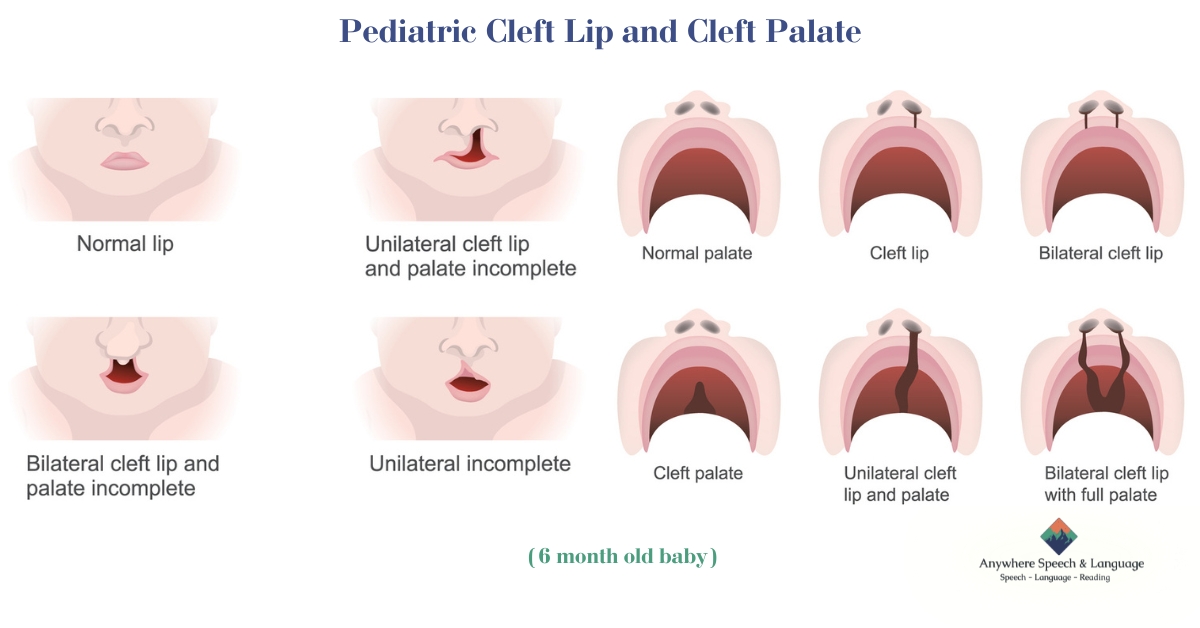
A cleft is an opening or gap in a part of the body that would normally be closed.
In this case, it refers to the lip, the palate (the roof of the mouth), or both.
A cleft lip is a split or opening in the upper lip.
It can appear on one side, both sides, or in the middle.
A cleft palate is an opening in the roof of the mouth.
This can affect the hard palate (the bony front part), the soft palate (the softer back part), or both.
Some children have only a cleft lip.
Some have a cleft palate only.
And some have both.
Cleft lip and cleft palate are among the most common congenital differences in the world.
They occur when the tissues that form the lip and palate don’t fully join together during early pregnancy.
With proper medical and therapeutic care, children with these conditions can live full, healthy lives.
What Causes Cleft Lip and Cleft Palate?
In most cases, there is no single clear cause.
Cleft lip and cleft palate are thought to result from a combination of genetic and environmental factors.
If a parent or sibling has a cleft, the chance of a child being born with one is higher.
But many children with cleft lip or cleft palate have no family history of the condition at all.
Certain environmental factors during pregnancy may also play a role.
These include smoking, alcohol use, certain medications, and nutritional deficiencies.
That’s particularly true for low levels of folic acid (vitamin B9) during pregnancy.
Folic acid (vitamin B9) plays an important role in healthy fetal development during pregnancy.
According to the Mayo Clinic, in some cases, a cleft occurs as part of a broader genetic syndrome.
In others, it occurs on its own with no other associated conditions.
However, it’s important to note that it’s not your fault.
Some children have cleft lips and/or cleft palates, and it’s not because of something you did wrong.
Your child’s medical team will help you understand what may have contributed to your child’s specific case.
Does a Cleft Palate Affect Speech?
Yes, it often does.
The palate plays a critical role in speech production.
When you speak, your soft palate lifts up and closes off your nasal passage.
This allows air to flow through your mouth, producing clear sounds.
If your child has a cleft palate, air can escape through their nose instead.
This is called velopharyngeal insufficiency (VPI), a condition where air escapes through the nose during speech, causing speech to sound nasal or less clear.
Children with cleft palate may also develop compensatory articulation patterns.
This means they learn to produce certain sounds in alternative ways to work around the opening in their palate.
While this is the child’s way of adapting, these patterns can be difficult to understand and often require addressing in therapy.
Children with cleft palates are at higher risk for:
- Articulation disorder
- Voice disorders
- Speech and language developmental delays
This is why speech therapy for cleft lip and cleft palate is such an important part of your child’s overall care plan.
It’s also worth noting that surgical repair of the palate doesn’t automatically resolve any speech differences they have.
Surgery repairs the structure of the palate, but children may still need support learning how to produce sounds and coordinate speech patterns effectively.
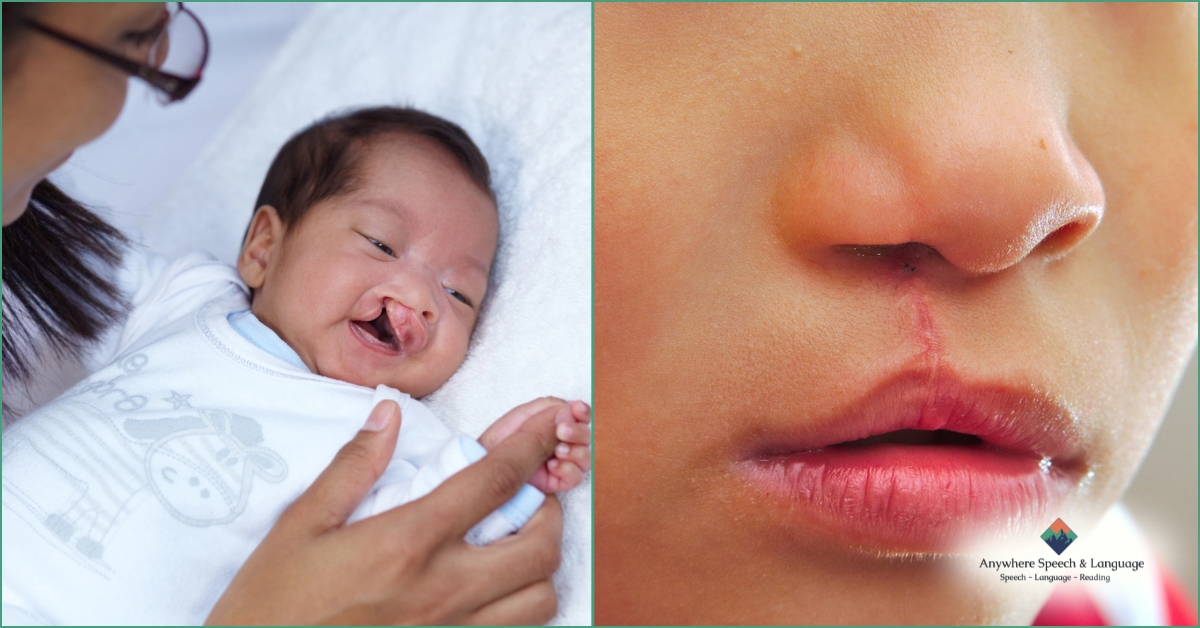
How Can Speech Therapy Help Children With Cleft Lip and Cleft Palate?
Pediatric speech therapy for cleft lip and cleft palate can make a significant difference.
However, it’s important to start early.
The earlier your child begins their speech therapy journey, the better.
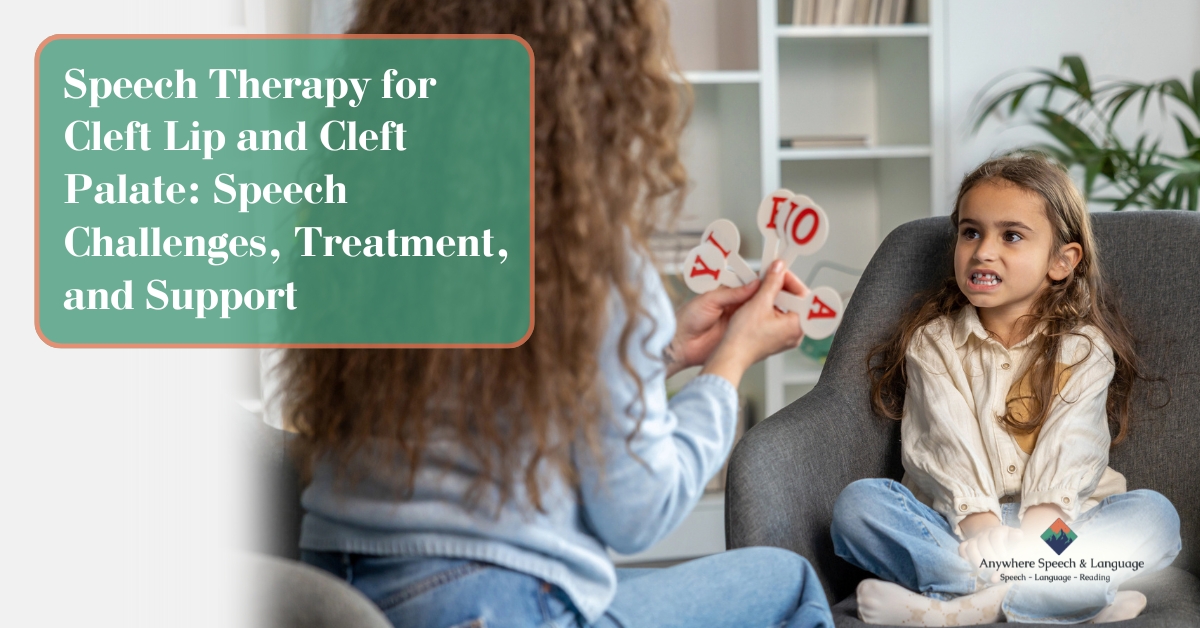
A speech-language pathologist (SLP) who specializes in cleft conditions will assess your child’s specific needs.
In particular, they’ll look to understand how your child’s cleft lip and/or palate has affected their speech and language.
They’ll also explore other possible speech-language conditions that may contribute to your child’s speech and language differences.
Some children with cleft conditions may also have co-occurring developmental or neurodevelopmental differences that can affect communication.
For example, research suggests higher rates of autism and ADHD in some children with cleft conditions.
So, your child’s speech and language differences may be a result of autism or ADHD, for example.
RELATED ARTICLE: Autism Speech Therapy for Kids: Signs, Benefits, and When to Start
Once your SLP has a full understanding of your child’s condition, they will develop a plan tailored to their specific needs.
This may include pre-speech development in the first year of life.
This helps your baby build the sound-making and oral motor skills that form the foundation of speech.
From there, they may offer articulation therapy.
This can help correct compensatory speech patterns that may have developed as a result of the cleft.
Your child may also benefit from language development support, since some children with cleft palate also experience delays in vocabulary and communication skills.
Speech-language pathologists are an important part of the cleft care team and often work closely with surgeons, orthodontists, and other specialists throughout a child’s development.
We work alongside surgeons, orthodontists, and other specialists to support the whole child.
Therapy is most effective when it begins early and continues consistently over time.
This is known as early intervention speech therapy.
But it’s never too late to start.
Children of all ages can make meaningful progress in speech therapy for cleft lip and cleft palate with the right support.
And we’re here to help.

Book Your Appointment with Our Speech Therapy Clinic Today
A cleft lip or cleft palate diagnosis can bring many questions and concerns, but with the right support, children can go on to communicate clearly, confidently, and thrive in everyday life.
Understanding how cleft conditions may affect speech and feeding is an important first step in supporting your child’s development.
Speech therapy provides individualized strategies to improve articulation, strengthen communication skills, and address compensatory speech patterns that may develop over time
With early and consistent support, many children make meaningful progress in their speech, confidence, and overall quality of life.
At Anywhere Speech and Language Therapy, we provide personalized online speech therapy for families across many states within the U.S., making expert support accessible wherever you are.
You can also learn more about how online speech therapy works before getting started.
Our team works closely with you and your child to create a tailored plan that supports their unique communication needs and developmental goals.
If your child has a cleft lip or cleft palate and you have concerns about speech, language, or feeding development, don’t wait to seek support.
Schedule an evaluation today and take the first step toward helping your child communicate with clarity and confidence.