New to the idea of speech therapy? If so, you’re not alone. You may have many questions about the process, and we’re here to help. Here, you’ll find some of our most frequently asked questions about speech therapy.
Don’t see your question below? No problem. Book your FREE consultation with one of our speech therapists, and we’ll make sure to put your mind at ease.
General Questions
Common questions about our practice, services, and who we support through online speech therapy.
What is Anywhere Speech & Language?
We are a passionate group of therapists who love working with people of all ages in online therapy sessions. Here at Anywhere Speech & Language Therapy, you’ll find speech therapists who meet you where you are in your communicative needs and online in your comfort zone. We work with children, teenagers, young adults, and older adults.
What qualifications do you need for speech therapy?
All speech therapists have at least a master’s degree in speech-language pathology. From there, they need to pass a nationally certified exam from ASHA, the American Speech-Language-Hearing Association. Beyond that, each state has its own licensing requirements.
How do I know if my speech therapist is licensed?
ASHA maintains a public registry of everyone who currently holds a license. You can look up your SLP on there.
What’s the difference between a speech therapist and a speech-language pathologist (SLP)?
None. Some in the field prefer one title over the other, but there’s no difference in the professional qualifications. These terms refer to the same field.
Getting Started & Evaluations Questions
Answers to common questions about beginning speech therapy, including consultations, evaluations, and how therapy plans are developed.
Why is speech therapy important?
Speech therapy is important because communication affects almost every part of our lives. When you can express yourself clearly and understand others, life tends to be a lot easier. We use our speech and language skills to learn, build friendships, express ourselves, and so much more. For children, strong communication skills lay the foundation for reading, learning, and the development of social skills.
Without support, speech and language challenges can lead to frustration, low confidence, and falling behind. Speech therapy helps people of all ages overcome these challenges. Whether your child is struggling to say their first words or a loved one is recovering from a stroke, an SLP can give your family the tools you need to communicate more effectively.
What is a speech therapy evaluation?
A speech therapy evaluation is a checkup for how someone speaks, understands language, and communicates.
During the evaluation, your speech therapist will examine several areas. They check how clearly you or your loved one speaks, and whether others can understand them. They also look at how well the person understands what others are saying. For younger children, they may check how well their speech and language skills match their expected developmental milestones.
The evaluation usually includes some informal activities, like talking or playing, as well as structured tests. Your SLP may ask you or your loved one to name pictures, repeat words, or answer questions. For young children, parents are often asked questions about their child’s communication at home.
At the end of the evaluation, your SLP will share their findings. This includes any diagnoses they were able to make. If they recommend therapy, your SLP will suggest a plan to address the issue.
How do I know if online speech therapy is the right fit for my family or me?
The best way to find out is to try. We offer a free “meet-and-greet” online or on the phone to help you decide whether we’re a good fit. You have nothing to lose by requesting a free consultation.
Pediatric Speech Therapy Questions
Information for parents and caregivers exploring speech therapy services for children delivered through an online format.
What is early intervention speech therapy?
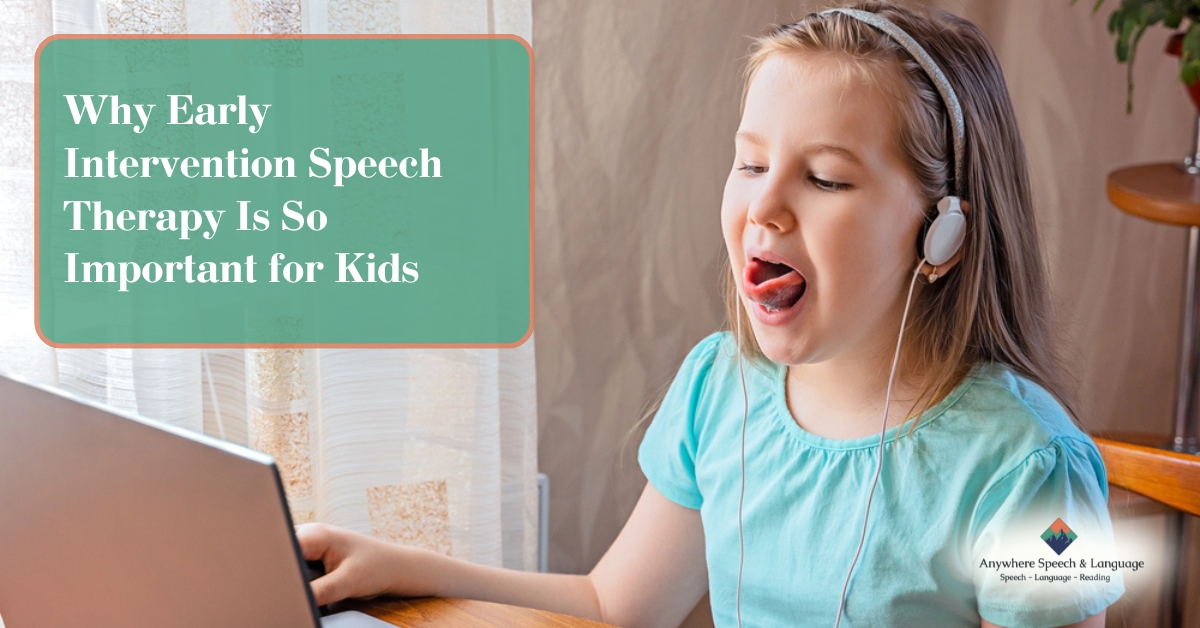
Early intervention speech therapy is a type of therapy designed to help young children who are having trouble communicating. The earlier a child gets help, the better their chances of catching up to their peers. That’s why early intervention is so important.
If your child isn’t meeting communication milestones, like babbling, saying their first words, or following simple directions, early intervention speech therapy may be right for them. Your speech therapist will work with your child to build the skills they need. This might include learning new words, understanding what others say, or figuring out how to express their needs.
In the United States, early intervention services are available through a federal program, and many children qualify for free or low-cost support. If you’re concerned about your child’s communication development, we’re here to help.
What does it mean if my child has a developmental delay?
In some cases, a speech and language developmental delay can be a sign of an underlying disorder. However, often we can’t actually tell the cause of a developmental delay. This is what we call an “idiopathic” developmental delay.
Whatever the cause of your child’s developmental delays though, speech therapy can help.
What age should I bring my child in for speech therapy?
There’s no single right answer to this question. It depends on your child’s individual development.
However, earlier is almost always better.
If you notice your child isn’t meeting their speech and language developmental milestones, don’t wait to seek help. If something feels off, trust your instincts.
An SLP can evaluate your child and let you know whether therapy would help.
Adult Speech Therapy Questions
Answers for adults seeking speech, language, or cognitive-communication support through online speech therapy.
Why do adults get speech therapy?
In some cases, adults seek speech therapy to address a speech or language disorder that was never treated when they were children. However, these days that’s becoming rarer.
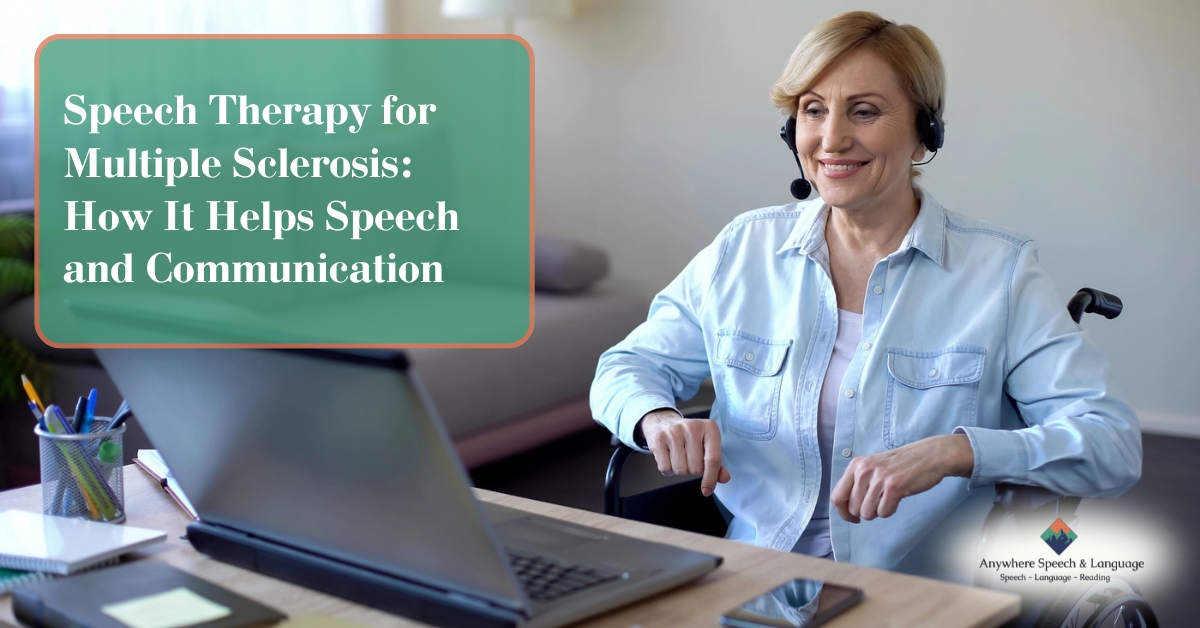
Instead, most adults who seek speech therapy are doing so because a speech or language disorder developed later in life. This includes things like stroke recovery, or speech changes due to Parkinson’s disease, multiple sclerosis, or other diagnoses that can affect voice. Adults also seek speech therapy for accent modification.
What’s the difference between pediatric and adult speech therapy?
Not much, actually. Treatment is still provided by SLPs who have the same level of qualifications. It’s based on the same evidence-based research.
The main difference is that speech therapy for children is often play-based. Children often need games and other play-based activities to keep them engaged. That isn’t true for adults.
Online Speech Therapy Questions
Details about how online speech therapy works, what to expect from telehealth sessions, and technology requirements.
How does online speech therapy work?
Each session will have a private, individualized link that connects you with your therapist. All you need is a modern device with a stable internet connection and a webcam. We also recommend high-quality audio to maximize your time with your speech therapist.
Is online speech therapy safe and secure?
As safe as any other form of speech therapy. Our video conferencing is HIPAA-compliant, so your data stays secure and private.
Is online speech therapy effective?
Online speech therapy has been gaining popularity in recent years, and it offers some significant benefits. However, research has also shown that in most scenarios, it’s just as effective as in-person speech therapy. In fact, it can sometimes be even more effective. This is particularly true for people with disabilities, for whom travel can be difficult.
Payment & Insurance Questions
Helpful information about fees, insurance coverage, private pay options, and billing-related policies.
Will my insurance cover my visit?
We can bill insurance in Oregon, Washington, Idaho, Montana, Alaska, Arizona, California, Nevada, Utah, Kansas, Florida, North Carolina, Minnesota, Texas, and North Dakota.
We are currently able to bill the following insurances:
- Blue Cross Blue Shield/Regence
- PacificSourceFirst Choice Health
- Cigna
- Flexible Spending Account
- Anthem
- Medicare (Western USA)
We are NOT yet able to bill insurance in all states. However, we also offer competitive private-pay rates. Take a look at our fees and insurance page for more details.
States We Currently Serve
Our speech therapy services are provided entirely online to clients in select U.S. states where our clinicians are licensed.
Trusted by Families and Adults
See what families and adults have shared about their experience with our online speech therapy services.
Helpful Articles Related to Common Questions
Some questions benefit from a deeper explanation than an FAQ can provide. These articles explore common speech therapy topics in more detail and may help you better understand your concerns, options, or next steps.